



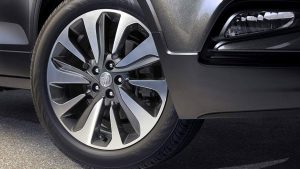
It can be easy to overlook the tires unless they’re worn or flat, but tire damage comes in many forms. Damaged tires are responsible for numerous accidents in the US, as they increase stopping distance and reduce traction. As your Buick dealer, we want to tell you some signs that you need to visit us for new tires.
Signs You Need New Tires From Your Buick Dealer
Cupped Tires
Cupping is a strange wear pattern that looks like sections of the edges of the tire tread have been scooped out with an ice cream scoop. This damage is caused by an alignment or suspension issue. The alignment is the angle of the tires to the ground. Depending on your model, your tires could be perpendicular to the surface or angled inward or outward when viewed from straight ahead or from above.
Alignment changes over time due to contact with the road surface, worn shocks or struts, or bumping the curb or any solid object. We can prevent this problem by connecting your wheels to our computerized alignment machine. We’ll also check your tires and replace any that are severely worn.
Over or Under-Inflated Tires
The correct tire pressure for your tires is listed in your car manual and is also displayed on a plate or sticker on the inside door jamb of the front passenger side door. Underinflated tires sag, exposing more vulnerable sections of the sidewall to friction with the ground and increasing the chance of a puncture.
Overinflated tires, in contrast, are more likely to suffer blowouts. When you’re driving, the air inside your tires heats up due to surface friction. This increases internal tire pressure, which is already slightly weakened by stretching due to the excessive amount of air inside it. Our technicians can correct either issue in minutes, and we’ll also check your tires to ensure they’re still safe to drive on.
Cracked Tires
Your tires are made from high-quality rubber, and they’re reinforced by steel and polymer bands in sections like the tread. Despite their superior construction, rubber will naturally lose elasticity over time, and reduced elasticity leads to cracks. When your tires heat up as you drive, the cracks will gradually widen and deepen.
Cracks that extend far enough into the tire surface will compromise the tire, and it will leak or blow out. If you spot cracks in your tires, visit us so our experts can examine them and advise you.
Driving on worn or damaged tires is dangerous. Visit us today at Schepel Buick GMC in Merrillville, IN.
Connect with us


- April 2026
- March 2026
- February 2026
- January 2026
- October 2025
- September 2025
- August 2025
- July 2025
- June 2025
- May 2025
- April 2025
- March 2025
- February 2025
- January 2025
- December 2024
- November 2024
- October 2024
- September 2024
- August 2024
- July 2024
- June 2024
- May 2024
- April 2024
- March 2024
- February 2024
- January 2024
- December 2023
- November 2023
- October 2023
- September 2023
- August 2023
- March 2022
Archives
- 2022 GMC Terrain
- 2024 Buick Encore GX
- 2024 Buick Envista
- 2024 GMC Sierra 3500 HD
- 2025 Buick Encore GX
- 2025 GMC Sierra HD
- GMC Trucks
- Merillville GMC Dealer
- Merrillville Buick Dealer
- Merrillville Buick Service
- Merrillville GMC Service
- Merrillville Used Cars
- Schepel Buick GMC
- Schepel Buick GMC Service
- Things to do near Merillville, IN
- Uncategorized